
If you’ve reached the point where you’re researching eyebrow transplants, it’s likely not a decision you’ve come to lightly.
Most people arrive here after years of thinning, patchy regrowth, over-plucking,
hormonal changes, or previous cosmetic procedures — after trying serums, pencils, makeup, and waiting for brows to “come back” on their own. When they don’t, permanent solutions start to feel appealing.
But before committing to something invasive and irreversible, it’s worth taking a step back — not to dismiss surgery, but to ensure every reasonable option has truly been explored.
Why Eyebrow Transplants Start to Feel Like the Next Step
When brow hair doesn’t return, many people assume the follicles are permanently inactive. That assumption often leads to one conclusion: replacement.
Eyebrow transplants are frequently seen as the definitive answer — a way to restore density once and for all. And for some individuals, surgical restoration may ultimately be appropriate.
However, this belief overlooks an important distinction: dormant follicles are not the same as destroyed follicles.
Brows behave very differently to scalp hair. Their growth cycles are shorter, more sensitive to disruption, and more easily affected by inflammation, trauma, hormonal shifts, stress, and ageing. In many cases, follicles haven’t stopped existing — they’ve stopped responding.
That difference matters.
What an Eyebrow Transplant Actually Involves
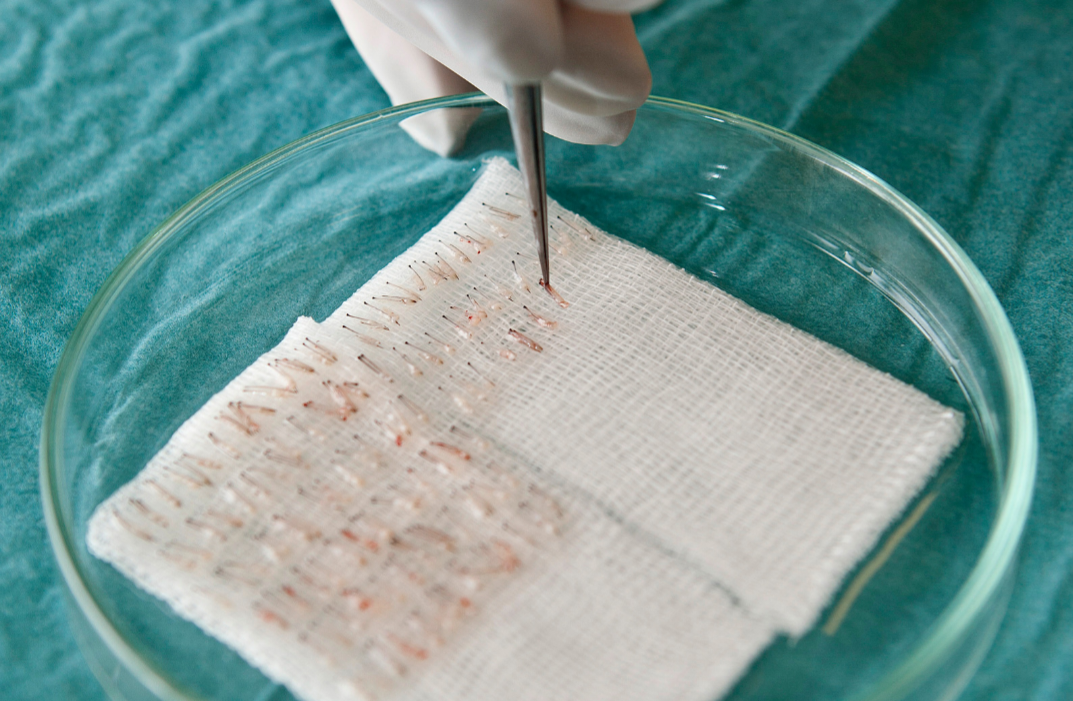
An eyebrow transplant is a surgical hair restoration procedure. It is legal and available in Australia and is typically performed by medical professionals using techniques such as Follicular Unit Extraction (FUE).
The procedure generally involves:
- Harvesting individual hair follicles from a donor area of the scalp
- Implanting those follicles into the eyebrow region under local anaesthetic
- A healing period during which implanted hairs shed and gradually regrow
- Long-term maintenance, as transplanted scalp hair continues to grow and requires trimming
Final results can take 6 to 12 months to fully develop and vary depending on graft survival, hair direction, healing response, and individual physiology.
While eyebrow transplants can produce natural-looking results, they are still surgery — permanent, invasive, and irreversible.
Why Some People Consider Eyebrow Transplants Overseas
Although eyebrow transplants are offered in Australia, some people explore overseas options due to cost differences, perceived expertise, or access to high-volume transplant centres.
This can introduce additional considerations:
- International travel and accommodation during recovery
- Limited access to follow-up care once home
- Managing complications or revisions remotely
- Healing away from familiar medical support systems
For many, this adds complexity to an already significant decision.
The Question Worth Asking Before Surgery
Before replacing hair surgically, a quieter but more important question is often overlooked:
Have my eyebrow follicles been given the opportunity to respond to a regenerative environment?
In many cases, brows that appear “non-existent” are not beyond recovery — they are operating under conditions that no longer support growth. Addressing follicle health, circulation, cellular signalling, and inflammation can change that response.
This is where a non-invasive, regenerative approach becomes relevant — not as a competing procedure, but as a first step.
A Non-Invasive, Regenerative First Step
The Growth Phase™ is a science-led, non-invasive brow and hair regeneration program designed to support natural growth rather than replace it.
The approach focuses on:
- Stimulating existing follicles rather than transplanting hair
- Supporting the scalp and brow environment at a cellular level
- Working with the body’s natural growth mechanisms
- Delivering progressive results without surgery or downtime
There are no incisions, grafts, or recovery periods. Clients return to normal activities immediately.
For individuals considering eyebrow transplants, this process can offer clarity — revealing how much regrowth is possible before making a permanent decision.
A Calm Comparison
| Surgical Eyebrow Transplant | The Growth Phase™ |
| Surgical procedure | Non-invasive treatment |
| Hair grafts taken from scalp | Works with existing follicles |
| Local anaesthetic required | No anaesthetic |
| Healing and downtime | Zero downtime |
| Permanent and irreversible | Progressive and adjustable |
| Results take months to assess | Gradual improvements over time |
These are not opposing options — they represent different stages of the decision- making journey.
Who a Regenerative Approach May Suit
A non-invasive brow regeneration program may be appropriate for those who:
- Are experiencing thinning, patchy, or slow-growing brows
- Have a history of over-plucking, hormonal changes, or cosmetic tattooing
- Are not ready to commit to surgery
- Want to explore lower-risk options first
It is not positioned as an overnight fix or a guaranteed outcome — but as a considered, ethical step grounded in biology and patience.
Making a Decision With Clarity
If you’re contemplating an eyebrow transplant, exploring a regenerative approach first can restore a sense of control to the process.
For many, understanding how their follicles respond changes the decision entirely. For others, it provides valuable information before moving forward surgically.
Either way, the most confident decisions are made when they’re informed — not rushed.


